eDGD – Create dangerous goods documents electronically
Web-based software for transport documents and dangerous goods documents: create, manage, share and archive for road, sea and air.
- One document in about 10 seconds
- Try free for 30 days
- Operated in Hamburg
Software for dangerous goods documents
eDGD is a web-based software-as-a-service solution that lets you create, manage, share and archive dangerous goods documents and transport documents quickly, simply and efficiently. It covers the entire transport chain for air, road and sea and reduces the rejection of shipments to a minimum. Many functions and procedures were discussed and coordinated directly with employees of the German Federal Aviation Office (Luftfahrt-Bundesamt, LBA).
Features at a glance
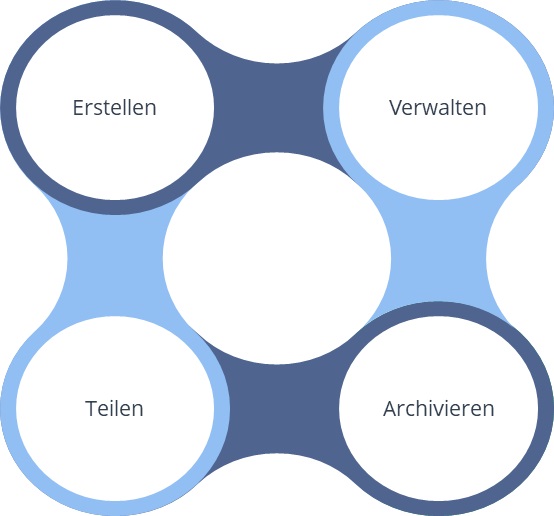
Create
- Templates for technical names, additional handling and contacts: a document in about 10 seconds
- Full-text search and autocomplete for UN numbers and packaging codes
- Search for overpacks
- Plausibility checks during data entry
Manage
- User, group and permission management with roles
- Contact management for shipper and consignee addresses
- Logging of entries
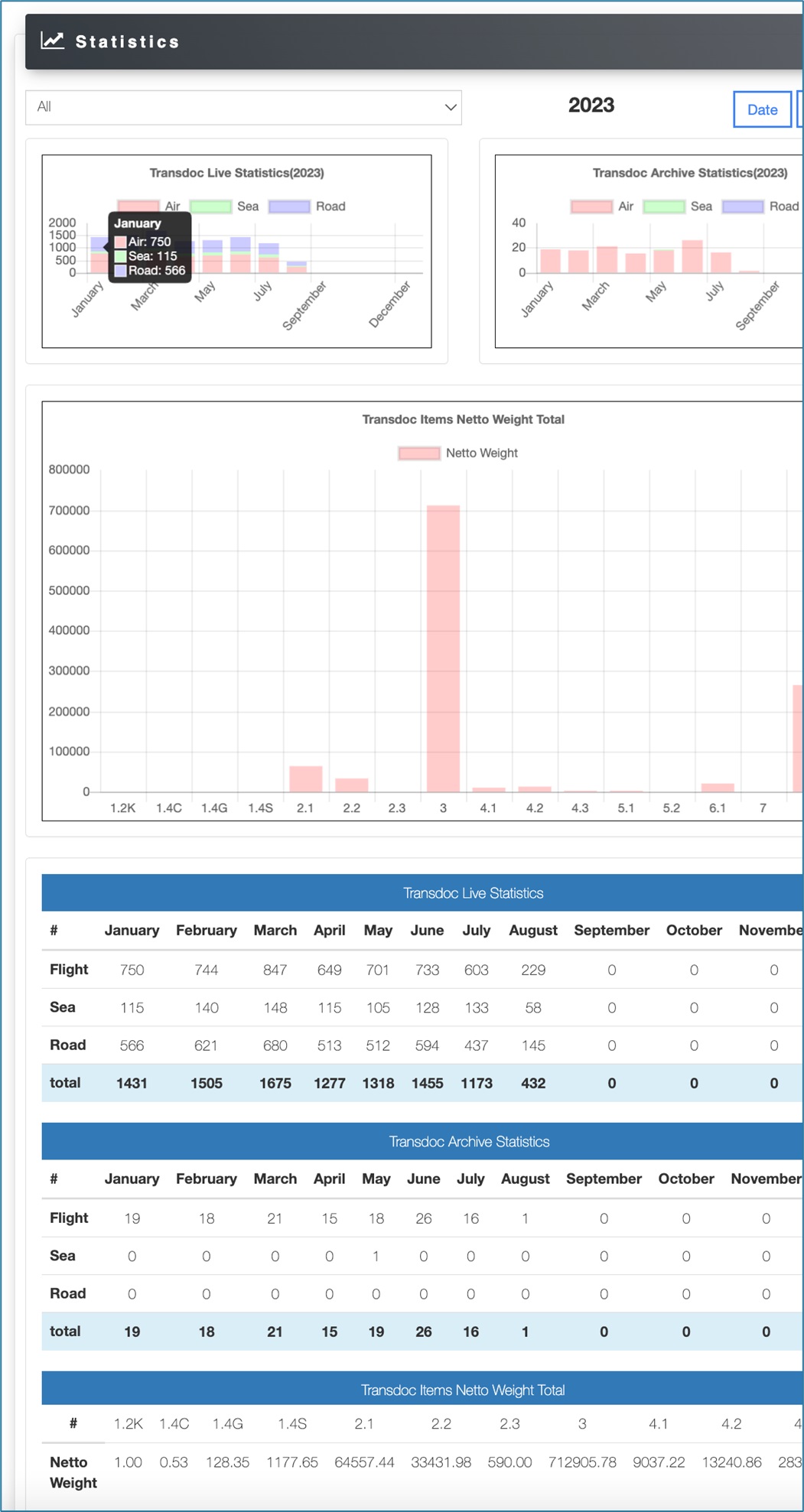
- Statistics with export function
Share
- Share documents with other eDGD users, with read or write permissions
- Notification by e-mail
- Notes for communication along the supply chain
- Access from any browser and any device
Archive and output
- Archive for completed documents
- PDF generation and printing
- Digital signature, certificates and facsimiles
- Paperless document dispatch
Road, sea and air in one application
Road transport (ADR)
- ADR transport document
- Complete ADR substance list
- Calculation under the 1,000-point rule
- Compliance with ADR regulations
Sea transport (IMDG Code)
- IMO declaration
- Flash point taken into account
- Compliance with the IMDG Code
Air transport (IATA DGR)
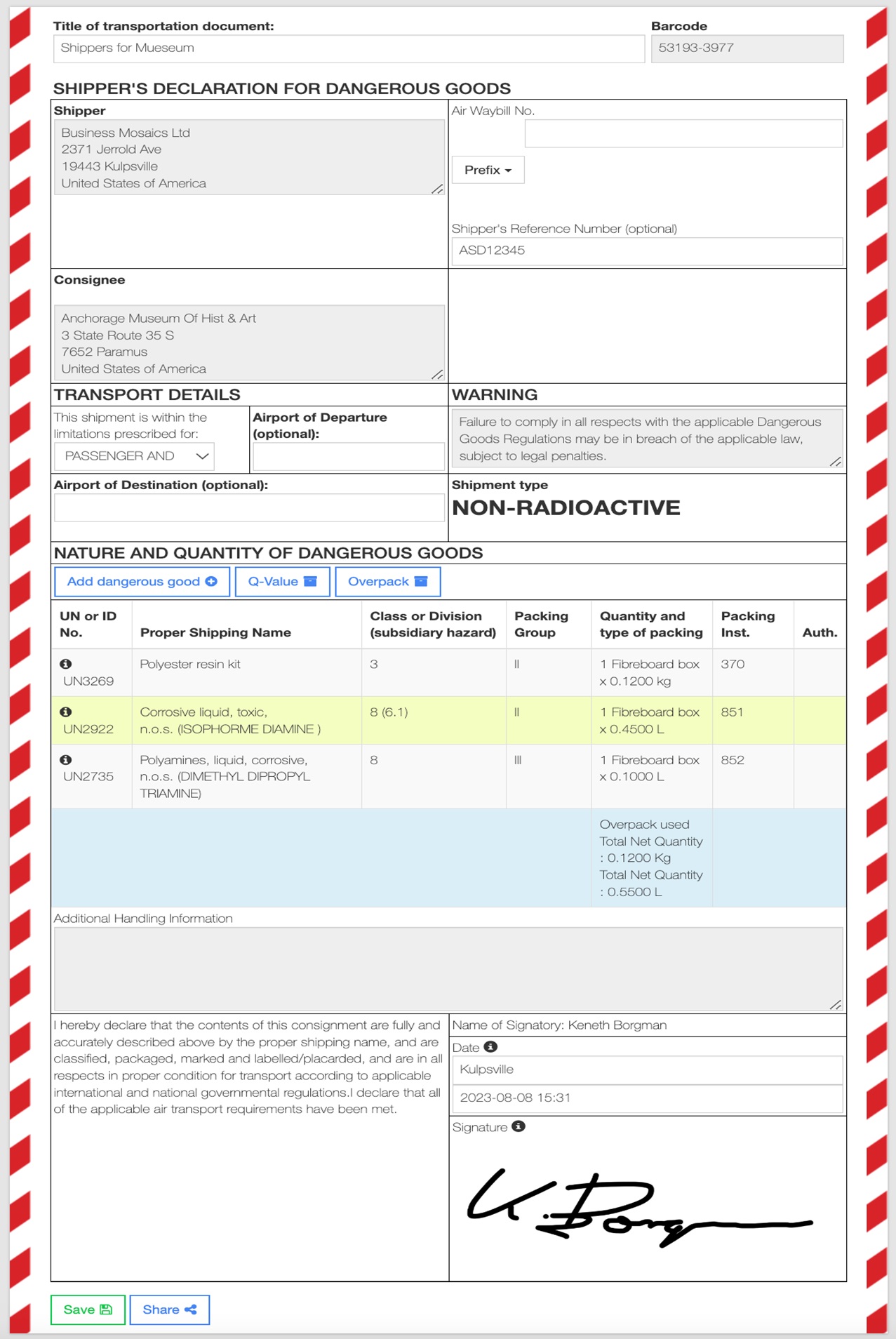
- Shipper’s Declaration
- Overpacks and Q-value calculation
- For shippers under IATA DGR Module A, following the ICAO Technical Instructions
The software is multimodal: documents can easily be converted to other modes of transport. Rail (RID) and inland waterways (ADN) are not part of eDGD’s scope.
Highest security
eDGD runs in a high-performance data center in Hamburg built to Tier 3 standard. The servers are fail-safe and highly available (HA cluster). All data entries are transmitted exclusively encrypted via TLS. GDPR requirements are met, and we also conclude a data processing agreement (DPA). All data is stored exclusively in our own data center infrastructure in Hamburg. On request we offer an exclusive hosting environment for even more data security, as well as white label and private label.
Easy to use
eDGD was developed from the start as web-based dangerous goods management software. It requires no installation and works on all devices with a browser such as Firefox or Chrome and on any operating system (Windows, macOS, iOS, Android), including smartphones and tablets. The interface is available in German and English, and our own wiki provides practical advice. User training is available at NMMN and on site.
Costs and operating model
eDGD is offered as software-as-a-service with pay-per-user billing, optionally on a dedicated server. We are happy to discuss your quote in a consultation. A test account lets you try eDGD beforehand.
A look inside eDGD
Try eDGD free for 30 days
No installation and no obligation. We are also happy to show you eDGD in person.
Questions about eDGD
Who is eDGD for?
eDGD is for manufacturers, shippers, freight forwarders, airlines and ground handlers who transport dangerous goods and need to create transport documents.
Which documents does eDGD create?
eDGD creates ADR transport documents for road, the IMO declaration for sea transport and the Shipper’s Declaration for air transport.
Does eDGD support rail or inland waterways?
No. eDGD covers road, sea and air transport.
How secure is my data with eDGD?
Data is stored exclusively in our own data center infrastructure in Hamburg (Tier 3 standard, HA cluster), transmitted encrypted via TLS and processed in compliance with the GDPR. A data processing agreement is concluded.